
Why invest in a Digital Maturity Assessment?
The ability to swiftly adapt and implement changes is a key characteristic of successful organisations. Swift responses to situations like production line breakdowns, changes in product requirements, or economic crises can greatly influence a company's profitability. Insufficient integration of information systems often causes delays in making business decisions, which hinders the smooth processing of data from capture to analysis. In addition to technological opportunities, organisational structure and culture play vital roles in ensuring a successful transformation.
Digital Maturity Assessments provide organisations with a comprehensive understanding of their current digital landscape, identifying areas of strength and opportunities for improvement. They are beneficial for all companies, regardless of size or current digital capabilities. By evaluating the organisation's digital capabilities across various dimensions such as technology, processes, and culture, Digital Maturity Assessments help companies develop a clear roadmap for their digital transformation journey. This strategic approach enables organisations to prioritise investments and initiatives, ensuring that their resources are allocated effectively to drive the most significant impact.
A digital maturity assessment is typically conducted by a group of digital transformation experts who ultimately create a roadmap to guide the organisation towards becoming a learning agile company. Depending on the outcomes of the digital maturity assessment, companies gain valuable insights and guidance on which initiatives will better help drive future decisions.
Assessing an Organisation's Digital Maturity
To measure a company’s digital maturity, the main steps required are as follows:
- Understanding Corporate Strategy and Aims
- Implementing Methodological Analysis
- Designing a Roadmap
1. Understanding corporate strategy and aims
To effectively conduct a Digital Maturity Assessment, it is crucial to first comprehend the organisation's aims and objectives, identify priority areas, and determine the key performance indicators to evaluate.
Value Driver Trees (VDTs) can address these questions by offering a visual representation of the organisation's value drivers and their relation to digital transformation. With the root representing the organisation's goals and objectives, VDTs branch out to cover different value drivers that can be further subdivided as needed, as shown in the example below.
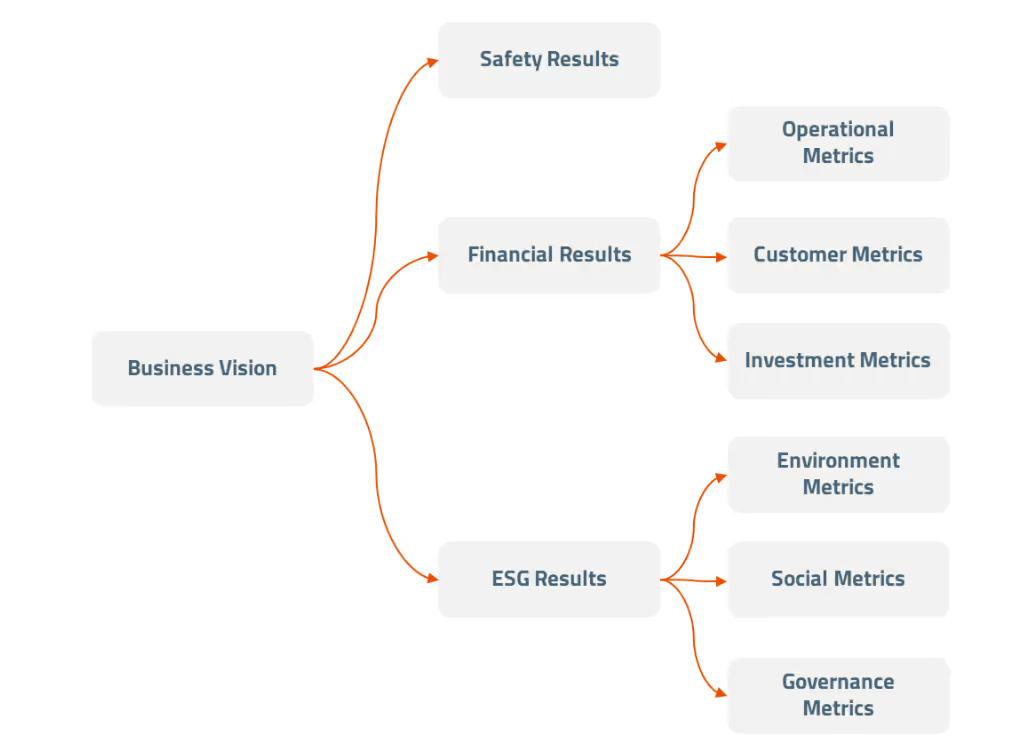
By grasping the organisation's core purpose, digital maturity assessments can target the central issues, enabling the company to make informed decisions on resource allocation and maintain focus. Establishing a clear scope for the assessment is essential, and various techniques can be employed to concentrate on specific departments or business dimensions, such as customers and operations.
2. Implementing Methodological Analysis
Evaluating the organisation's current maturity level is vital to identify gaps and opportunities. Data collection can be facilitated through interviews, questionnaires, feedback surveys, and workshops. Through these methods, a wide array of stakeholders can be engaged, providing a well-rounded view of the organisation’s digital maturity.
These results are then benchmarked against industry standards to determine the organisation's digital strengths and weaknesses. It is important to recognise that low maturity in certain areas does not always necessitate immediate action; other areas with higher value potential may be more beneficial for the company's growth.
3. Designing a Roadmap
During the digital maturity assessment process, various opportunities and initiatives for improvement will be uncovered. These opportunities should be scoped and prioritised based on factors such as potential value, ease of implementation, and alignment with company goals. This prioritisation helps create a digital maturity roadmap that enables the organisation to stay ahead of the curve or keep pace with industry standards. Priorities may be adjusted as needed, taking into account the company's strategic direction.
This roadmap, which includes specific recommendations for future growth, shapes the organisation's trajectory. It is crucial to recognise that the digital maturity assessment is an ongoing process, and the company's goals and priorities may evolve over time. As a result, regular reevaluation of the roadmap and plans is essential for continued success. Utilising the established baseline allows for tracking progress and capturing long-term improvements effectively.
Conclusion
The digital maturity assessment serves as a critical tool for understanding a company's strengths and weaknesses within the digital landscape. Whether conducted internally or with the aid of external consultants, it establishes a solid foundation for growth and prosperity through digital transformation.
For organisations navigating the complex challenges of an ever-changing digital environment, a Digital Maturity Assessment can prove to be a game-changer. By offering a strategic roadmap to guide digital transformation efforts, companies can harness their full potential, allocate resources effectively, and excel in today's competitive market.