Building a culture of experimentation within a business is a transformative process that extends beyond merely adopting new tools. It requires a fundamental shift in mindset, prioritising curiosity, data-driven decision-making, and democratised innovation. Global companies like Booking.com, Amazon, and Google have demonstrated that fostering an environment where all employees can propose and run experiments leads to significant advancements and competitive advantages. In the banking sector, adopting a similar culture of experimentation can drive innovation, enhance customer experiences, and improve operational efficiency. This article explores how core bank sectors can effectively build and leverage an experimentation culture to achieve these goals.
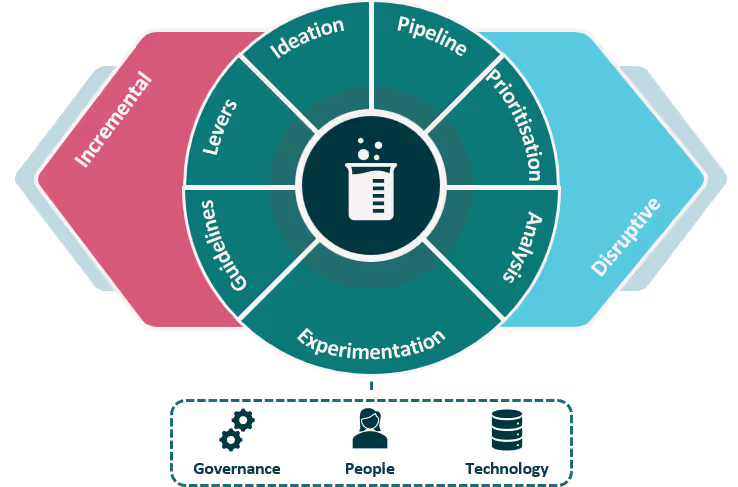
Visagio's approach to innovation and growth emphasises a structured cycle of experimentation applied to both incremental and disruptive ideas: experiments with existing data and innovative ones with new data sources. The core of this approach is three pillars: governance, people development, and technological advancement.
Key Components
Experimentation Cycle
- Guidelines and Levers: Establish guidelines and identify key drivers to ensure experiments are aligned with strategic goals.
- Ideation, Pipeline and Prioritisation: Generating new ideas through dynamic and engaging activities, building a structured funnel for ideas to be evaluated and prioritised, and using the ICE Score (Impact, Confidence, Effort) to prioritise initiatives.
- Experimentation: Implementing and testing ideas in controlled environments.
- Analysis: Evaluating results and iterating based on data.
Pillars
- Governance
- Ensure strong governance with a clear framework to support dynamic operations and alignment towards results.
- Utilise agile methodologies, including regular sprints and meetings to maintain progress and address any impediments.
- Incorporate stakeholder feedback and ensure continuous improvement.
- Ensure strong governance with a clear framework to support dynamic operations and alignment towards results.
- People Development
- Build a multidisciplinary team with strong technical capabilities and continuous training.
- Promote a culture of collaboration and knowledge sharing within the team.
- Develop leadership through hands-on experience and structured training programs.
- Build a multidisciplinary team with strong technical capabilities and continuous training.
- Technology
- Develop tools to automate the tracking of results and ensure consistency across experiments.
- Implement dashboards for real-time monitoring and analysis of experiments.
- Ensure robust data management practices to support informed decision-making.
- Develop tools to automate the tracking of results and ensure consistency across experiments.